

“If any regard is to be had to the general beauty of the landscape, the natural material for the special countryside should be used instead of imported material.”
William Morris on external covering of roofs 1890
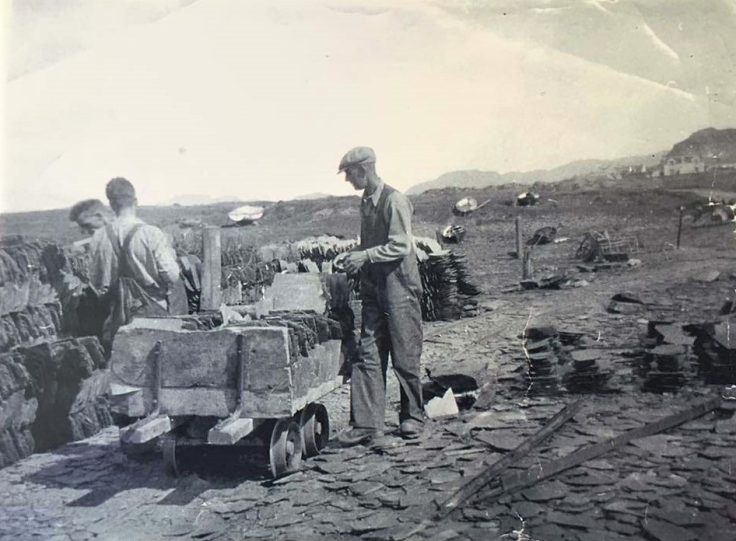
Slate production in Scotland peaked towards the end of the nineteenth century, when in 1896, 45,000 tonnes were produced (approximately 8% of the national total at the time). In the early twentieth century, slate production started to decline, and by 1910 it was almost half of what it had been at its peak just 15 years earlier. During World War I, slate production in Scotland had all but ceased for several years, picking up slowly after the war. Faced with a lack of labour, cheaper imported material and a move towards roof tiles, a lack of investment which ultimately led to the demise of the slate industry in Scotland. This impacted rural communities like Ballachulish and Luing which relied heavily on the slate industry to provide employment and sustain the local economy.
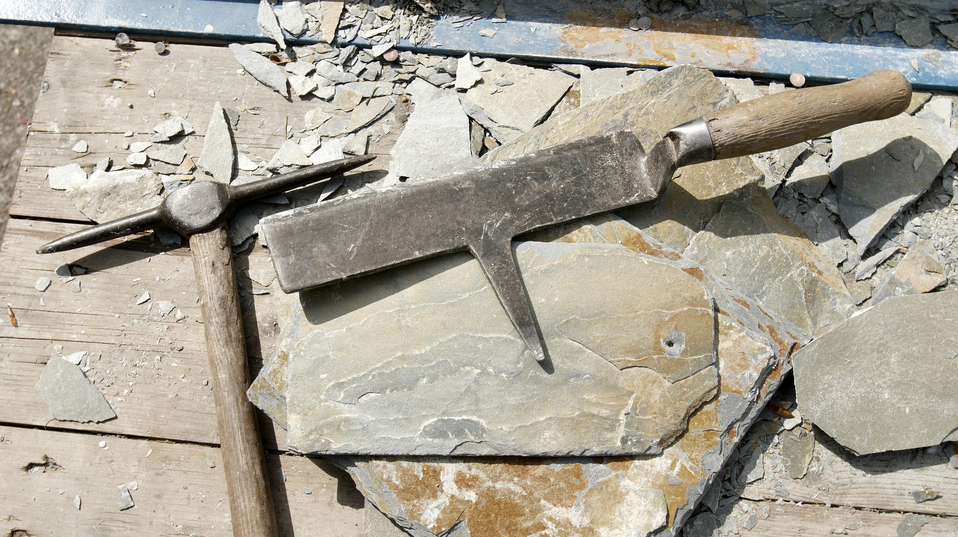
Sixty years after the last quarry closed, traditional slating practices remain visible on many roofs across Scotland’s historic built environment. Serving as a reminder of a material hard won from quarries, split to variable thickness, and dressed by hand, giving us an attractive and tough roofscape that is extremely resilient to Scotland’s climate.
The slate crisis – Without new Scottish slate being quarried, we will soon reach a tipping point after which material to repair or renew the roofs of even our most valued historic buildings will be impossible to find. The use of reclaimed Scottish slate is becoming harder to source in enough quantity and sufficient quality, with approximately only half being suitable for reuse and further material lost through redressing, etc. In many cases, two or three roofs need to be stripped to replace one.
We have become ever more reliant on imported slate, which is putting traditional Scottish slate practices and knowledge at risk. Scottish slates are often thicker with a rougher face and supplied in random lengths and widths. In contrast, imported slates that are often smoother, come in a small range of sizes (so they are often laid in one size), which has a very different appearance.
The Slate Islands
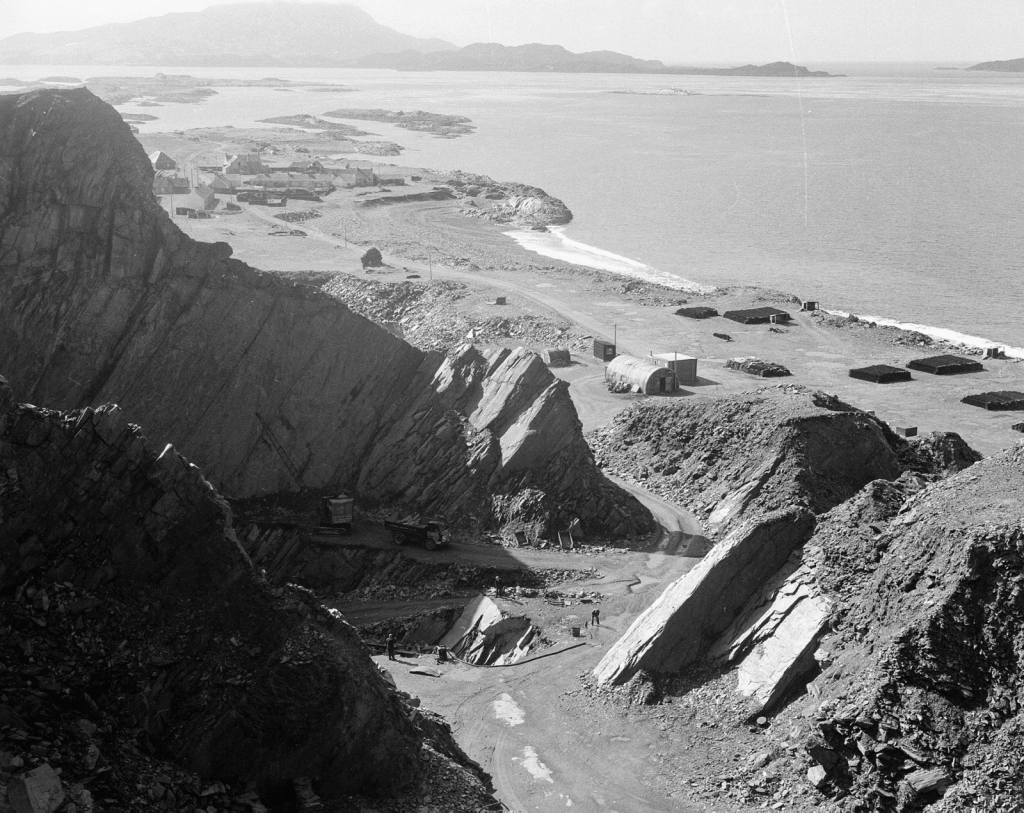
On the west coast of Scotland, a few miles south of Oban, lie the slate islands, made up of Easdale, Luing, Seil and Belnahua. The four small islands, known as “the islands that roofed the world”, exported slates throughout Scotland and to many other countries. The geology of these islands created the conditions for an industry that would span several centuries and shape the communities that lived there.
During the peak years of the late 1800s, the slate industry on Luing sustained a vibrant, thriving population of over 600 people. The ‘quarriers’ cottages’ built to house these island communities have a distinct material-focussed vernacular style and contribute a great deal to villages’ character. The villages look much as they did when they were built, with slate floors, whitewashed slate walls, slate roofs, and even gardens and fields delineated with dry stone slate walls. When walking through the village today, Cullipool is much quieter than in its industrial heyday. However, it’s not hard to envisage how life might have been during those formative years when the island was bustling with slate-focused activity.
The quarriers’ cottages are now within a conservation area and are still used as homes. While some may consider these cottages too small for modern-day family living, people have adapted them to suit their lifestyle while protecting their historic aspects. It is this vernacular architecture that brings people from all over the world to immerse themselves in these ‘historically industrial’ picturesque settings.
Fragile Islands
Like other rural and island communities throughout Scotland, Luing is faced with many challenges, including an aging population/depopulation, economic development and transport issues. The difficulties faced by young people trying to make a life on the island are immense. Finding affordable housing or land to self-build is almost impossible, and the high cost of island living is made worse by the constraints and costs of limited ferry services.
The declining number of working-age people has had an impact on island services, making the community less resilient. Ensuring that young people can afford to stay on or move to the island (which many wish to do) is essential for its future. Even where employment opportunities exist, a lack of affordable housing, community facilities and reliable transport, can make recruitment difficult.
Coastal Erosion
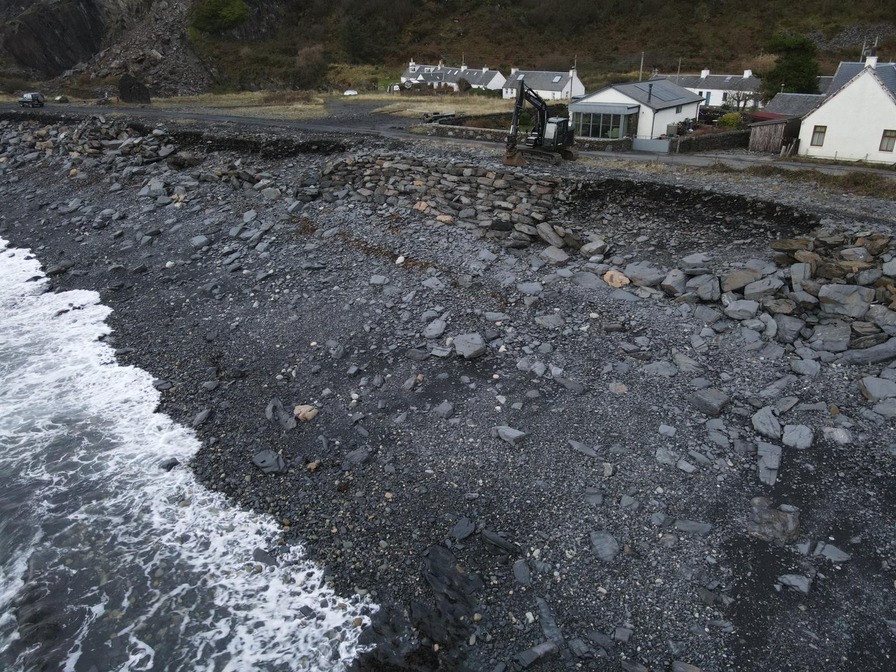
Many of our island communities are going to be disproportionately impacted by the effects of climate change through increased storms, coastal erosion or rising sea levels. The village of Cullipool on the west of the island bears the brunt of the Atlantic Ocean. In 2019, Storm Aiden demonstrated how fragile some of our coastal communities are. Cullipool was devastated by flooding, and the ‘rip rap’ (rubble) sea defence wall that protected the village was significantly damaged.
The health and viability of the beach at Cullipool has been sustained in the past by the supply of quarried waste from the slate quarries. It is this waste material that essentially built up a gradient along the coastline, pushing the shoreline further out and helping to manage the impacts of the tides and storms.
Over the last 60 years, as the beach has been starved of fresh material, the coastline has eaten into the reserve of spoil material along the shore. The gradient has been lost, and a flat-faced rip rap boulder wall is all that stands between the shore and village.
A proposal put forward by the University of Glasgow looked at how re-nourishing the coastline with waste material through establishing the quarry could take the coastline back to its 1995 volume. Some 29,000 m3 of material would be required, which could be taken from overburden extracted when setting up the quarry. After this initial campaign, the coastline will need to be recharged with waste material on a continual, annual basis (although in much smaller volumes). This approach will ensure the short-term immediate environmental impacts are dealt with, however, the activity will need to be carefully monitored and managed accordingly.
Re-imagining a historic industry in the 21st century
Research over many years has established that there is still an abundance of building material in Scotland as well as a strong demand for a Scottish-type slate. Luing has a sizable reserve of material, with some 90% of the island underlain with slate.
Historic Environment Scotland and Highlands and Islands Enterprise have been collaborating with the Isle of Luing Community Trust to explore the re-opeening of the existing historic slate quarry at Cullipool. The immediate benefit to the island will be the re-nourishment of the coast line to manage the effects of coastal erosion and the impacts of future storms. In the longer term, there is the opportunity for the community to create high-value, highly-skilled jobs that can help address some of the issues around depopulation. The Isle of Luing Community Trust (which owns and manages the Atlantic Islands Centre) also holds the mineral rights to a part of the island, meaning that any wealth created will remain on the island, ensuring maximum community benefit.
The proposal developed by the Trust is for a small-scale venture focusing on the higher-value roofing slate, which would be appropriate for the size of the island and the infrastructure in place. A workforce of six to eight people could potentially see around 200 tonnes of roofing slate produced annually, equating to around one or two vehicle movements per week. A new slate industry (however small) will create the opportunity to repair and renew the roofs of some of our historic buildings using West Highland slate.
The island’s industrial heritage is already a big draw for visitors, and the re-establishment of quarrying offers the opportunity to enhance the understanding of the area’s history.
Re-establishing quarrying on Luing is not without challenges, however. We will need to re-learn the skills we once took for granted and disregarded when cheaper imported slate material became available. In 2023 the UK imported over 112,000 tonnes of roofing slate from Spain alone.
Many historic quarries were noisy and dusty places with scant regard for how the environment was left. Modern quarrying requires rigorous health and safety standards as well as ensuring the natural environment is considered. This means that any new quarries must also be returned to a safe state, something that many historic quarries failed to do.
Even with all these challenges, there is real optimism for the island’s future. The Trust have recently achieved full minerals planning permission for the project and are seeking funding to realise the vision.
With thanks to Zoe Flemming and Colin Buchanan of the Isle of Luing Community Trust, and Luing History Group for their help with this article.
To find out more about the project, visit the Isle of Luing Community Trust’s website:
https://isleofluing.org/about-isle-luing/isle-luing-community-trust


