

From elegant marble bathrooms and characterful limestone floors to striking kitchen worktops and statement feature walls, natural stone can transform the interior of a home.
It is a material that has been used in our homes for thousands of years, and today its combination of natural beauty, durability and sustainability makes it as relevant as ever.
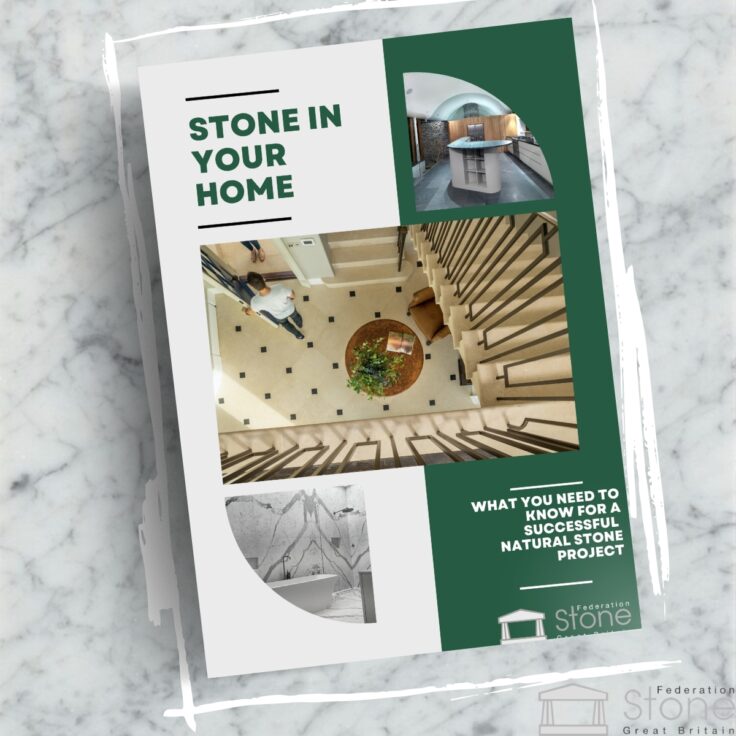
Stone Federation’s new Stone in Your Home publication has been created to provide homeowners, designers and those undertaking residential projects with an accessible introduction to natural stone and the key considerations that can help make a project a success.
So, if you are considering natural stone for your home, what do you need to know?
Why choose natural stone?
Perhaps the greatest appeal of natural stone is its individuality.
Formed within the Earth over millions of years, every piece has its own combination of minerals, colours, veining, fossils and textures. No two slabs are exactly the same, meaning that a natural stone installation has a character that manufactured stone-effect products simply cannot replicate.
But appearance is only part of the story.
Stone has been used successfully in buildings for centuries and, when correctly specified and maintained, can offer exceptional longevity. This durability also contributes to its sustainability credentials. Natural stone comes out of the ground ready to be cut, finished and installed, rather than being manufactured by combining multiple ingredients, while its long service life means it can remain in use for generations. At the end of one application, stone can also often be reclaimed, reused or repurposed.
Choosing the right stone
One of the most important things to understand is that not all natural stones are the same.
Limestone, marble, granite, sandstone, slate, travertine and quartzite each have different geological and technical characteristics, making some better suited to particular applications than others.
Granite, for example, has high strength and low water absorption, characteristics which can make it an excellent choice for worktops and kitchen islands. Limestone offers an enormous variety of colours and can contain distinctive fossils, while marble can take a highly polished finish and offers an extraordinary range of colours and patterns.
Rather than selecting a stone based purely on appearance, speak to a specialist about how and where you intend to use it.
Where can you use natural stone?
One of natural stone’s strengths is its versatility.
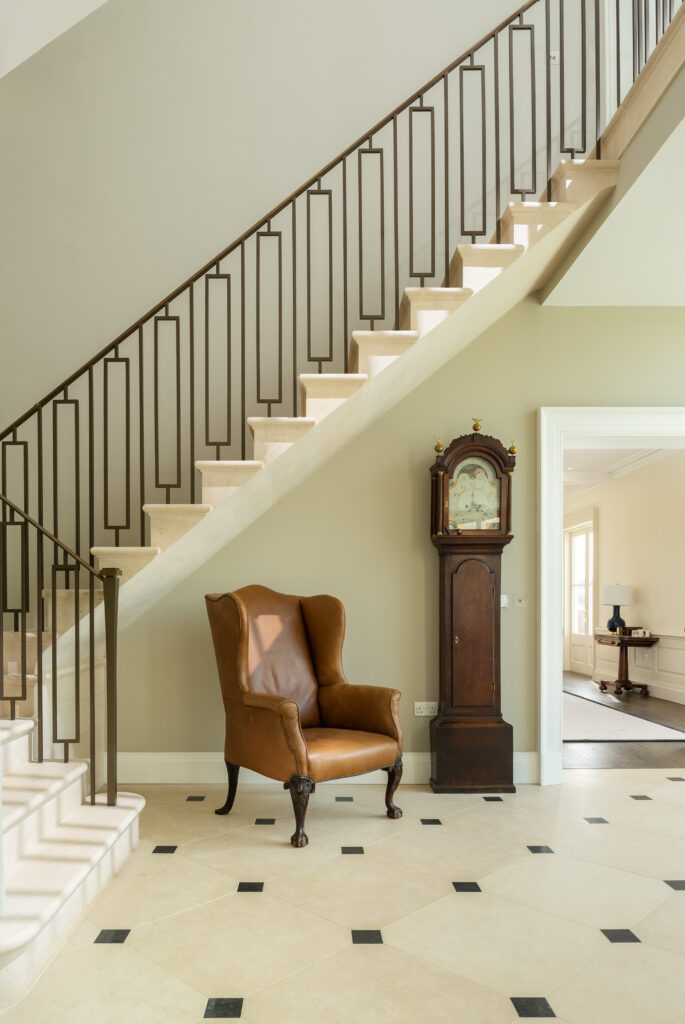
Flooring is a particularly popular application. The durability of many stones makes them capable of handling the demands of a busy household, while natural ageing can add character to the material. When selecting a stone floor, however, factors such as slip resistance, finish, underfloor heating and movement joints all need to be considered.
In bathrooms, stone can create anything from a subtle, calming interior to a dramatic statement. Particular attention should be given to slip resistance and ensuring that the chosen stone is technically suitable for areas exposed to repeated wetting and drying.
Natural stone can also create spectacular internal feature walls and cladding, including book-matched installations where the pattern of adjoining slabs is carefully arranged to create a striking visual effect.
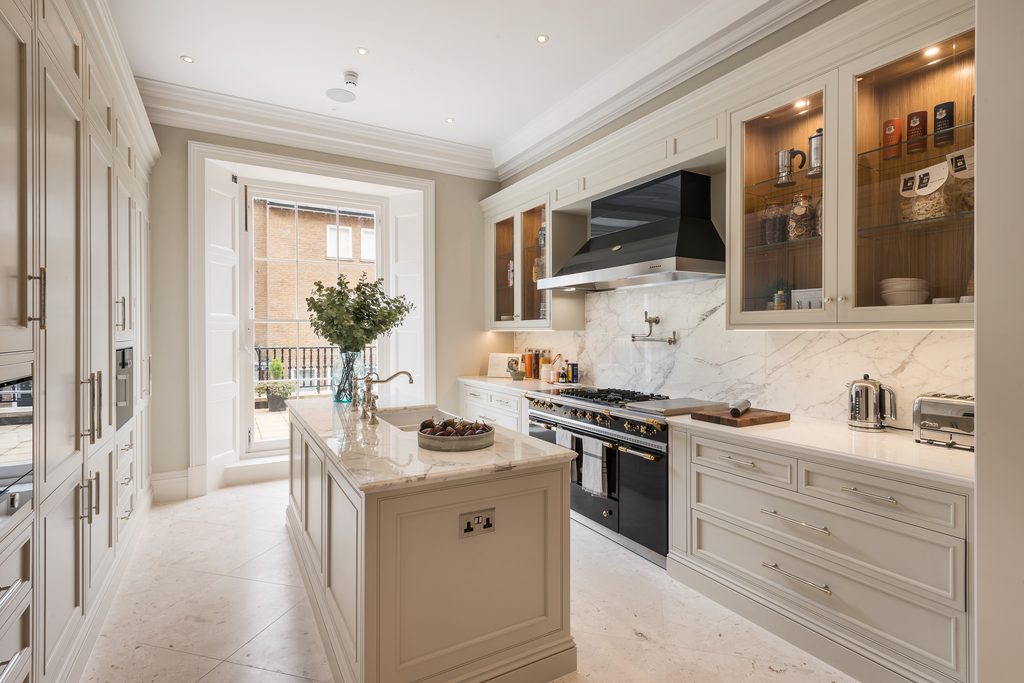
And, of course, there are kitchen countertops. The right natural stone can provide a beautiful focal point while delivering a surface capable of lasting for many years. Stone hardness, interaction with food and liquids, heat and even the desired edge profile should all form part of the selection process.
Don’t overlook the finish
Choosing the stone itself is only one part of the design process.
The finish applied to its surface can dramatically alter both its appearance and performance. A polished stone can look very different from the same material with a honed, brushed or textured finish.
Stone in Your Home introduces nine different finishes, including polished, honed, bush-hammered, flamed, sandblasted, leathered, broached, brushed and sawn, helping demonstrate the breadth of design possibilities available.
Looking after your stone
Natural stone can last for generations, but, like any high-quality material, it benefits from appropriate care.
Regular cleaning with a suitable pH-neutral cleaner can help maintain its appearance, while some stones may benefit from an appropriate impregnator or sealant. One of stone’s major advantages is also its repairability: in many cases, surfaces that have become dull, etched, marked or damaged can be professionally refinished or repaired rather than replaced.
Start with the right advice
A successful natural stone project starts with selecting the right stone, in the right finish, for the right application.
That is why Stone Federation recommends working with a Stone Federation member, helping to ensure that industry best practice is followed. The Federation also provides a free technical email helpline for questions before, during or after a natural stone project.
Whether you are planning a new kitchen, bathroom, floor or complete home renovation, natural stone offers the opportunity to create something beautiful, individual and built to last.
Planning a natural stone project? Download Stone Federation’s new Stone in Your Home guide to discover what you need to know to make your project a success.


