

When we talk about sustainable construction, carbon often dominates the conversation. It is a vital consideration, but creating a better built environment also means looking at water use, resource efficiency, longevity, and what happens to materials when buildings change. Natural stone offers a compelling story across these interconnected areas, giving architects, designers and clients reasons to consider it from the earliest stages of a project.
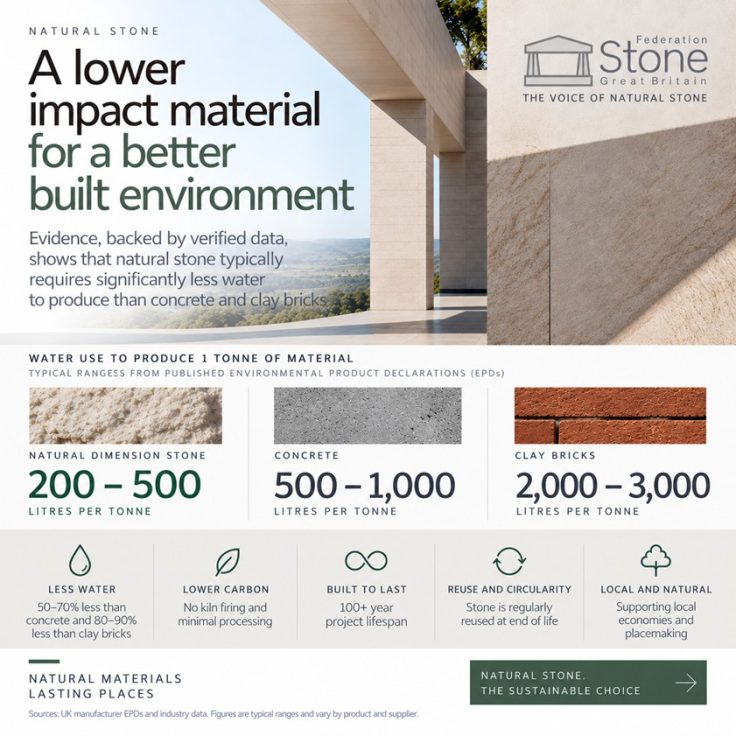
The figures shown on the image above bring one of these benefits into focus: the water associated with producing construction materials. It presents indicative ranges of 200–500 litres per tonne for natural dimension stone, compared with 500–1,000 litres for concrete and 2,000–3,000 litres for clay bricks. These figures highlight the potential for stone to contribute to more resource-conscious construction, alongside its architectural qualities.
The ranges are a starting point for discussion. As the graphic explains, figures vary by product and supplier. Stone type, processing requirements, production methods and the scope of the underlying assessment all matter. For a specification decision, the next step is to examine the relevant Environmental Product Declarations, or EPDs, and understand precisely what each figure measures.
EPDs provide transparent information about a product’s environmental performance, helping project teams move from broad sustainability claims to evidence that can inform material selection. Stone Federation’s Natural Stone EPD Hub brings together declarations that support this process. Crucially, an EPD provides data; its value lies in how that data is interpreted and applied to a project.
A comparison per tonne helps illustrate differences in production, but buildings are designed around performance. A wall, floor or paving scheme may require different quantities of different materials to fulfil the same function. Meaningful comparisons should therefore consider the complete solution, including thickness, supporting materials, installation and anticipated service life. This gives designers a more useful picture of the environmental implications of their choices.
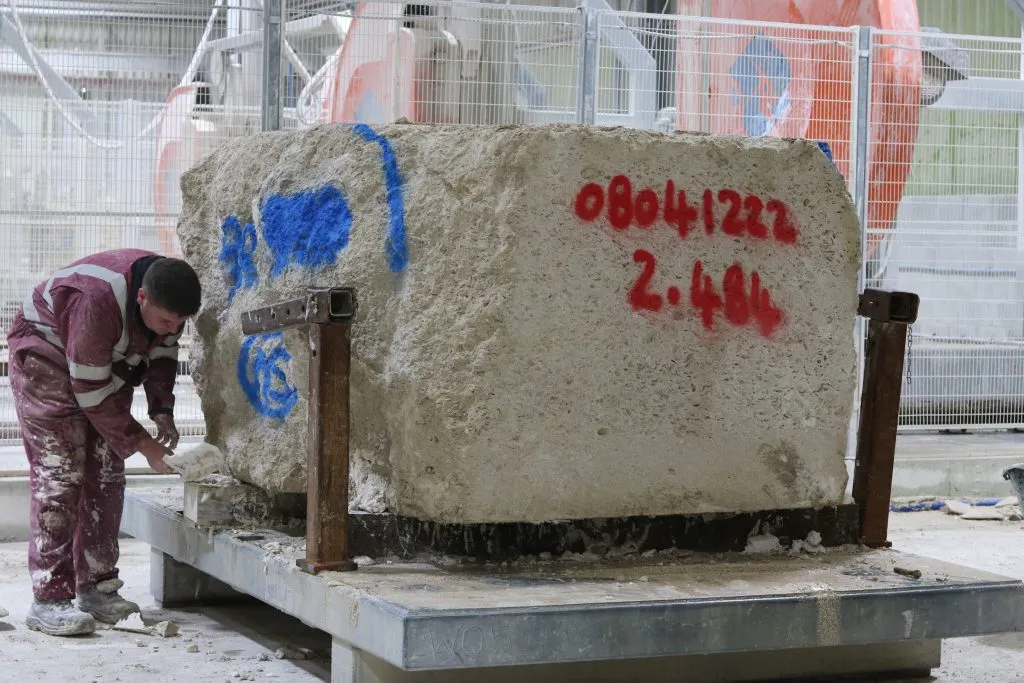
Water deserves attention within that assessment. In stone processing, it can support cutting, cooling and dust control. Managing it efficiently is therefore an important part of responsible production. Specifiers can ask suppliers how water is sourced, treated and recirculated, and how these practices are reflected in the available environmental data. These conversations help connect the finished material with the processes behind it.

Natural stone’s wider environmental appeal also comes from its relationship with manufacturing. The geological material already exists: extraction and processing prepare it for use. Many stone products require cutting and finishing without kiln firing. The amount of processing varies, however, making the choice of stone, finish and supplier important when assessing the carbon and resource demands of a proposed application.
Longevity adds another dimension. The figures identify the potential for project lifespans exceeding 100 years, reflecting stone’s established role in enduring buildings and landscapes. Achieving that potential depends on selecting a suitable stone and designing, installing and maintaining it correctly. Durability is an outcome that informed specification and skilled workmanship help deliver.
For clients, this means thinking beyond the day a project is completed. A material that remains serviceable for decades can reduce the need for replacement and the associated demand for new resources. Natural stone also develops character through use and weathering. In suitable applications, that evolution can enrich a place, supporting an architectural approach that values lasting quality.
Reuse extends the conversation further. Stone can retain value after its original application has ended, with opportunities to recover and repurpose suitable elements. Designing for this possibility requires early thought about dimensions, fixings, access and dismantling. Preserving stone as a usable building component offers a different opportunity from processing it into aggregate, and both should be considered realistically within project planning.
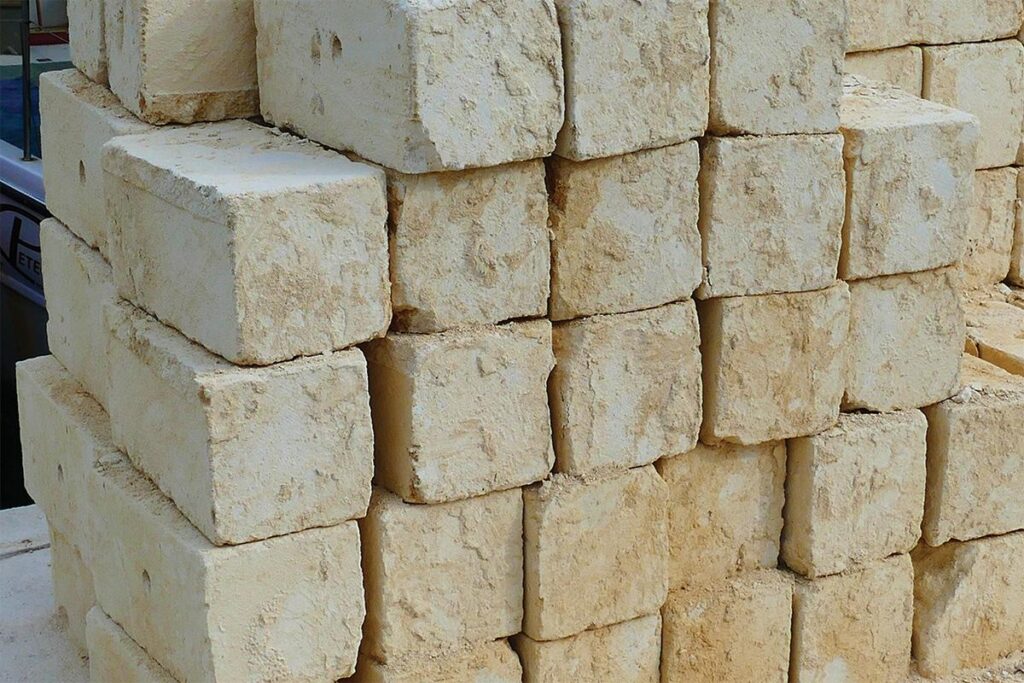
Local sourcing brings environmental considerations together with place and people. Choosing an appropriate indigenous stone can support quarrying, processing and craft skills while strengthening the connection between a building and its surroundings. Transport impacts still depend on distance, mode and logistics, but understanding the supply chain enables project teams to explore local options with greater confidence.
For architects and designers, the practical message is to involve stone suppliers early. Discuss the intended application, request relevant EPDs, explore efficient dimensions and finishes, and consider maintenance and future recovery. Early engagement creates space to resolve technical questions while developing the design. It can also reveal opportunities to use the material more efficiently and make better use of the available resource.
A better built environment depends on decisions that unite environmental evidence with performance, beauty and long-term value. Natural stone deserves a place in that conversation. By considering water alongside carbon, durability, reuse and locality, project teams can build a fuller understanding of its potential—and specify it with confidence.
Stone Federation helps turn that interest into informed action, connecting specifiers with industry knowledge, technical resources and experienced members.


